Successful product launch advertising follows a phased sequence: build a warm audience before launch, concentrate spend into a tight launch-week window, then shift to a 30-day sustain loop built on retention and creative reuse. The phased approach typically runs 2 to 6 weeks of pre-launch waitlist building, a 7 to 10 day concentrated push, then a month of optimization. For that concentrated week, a tool like NowYourLink’s Spotlight auction can add a single day of undivided homepage visibility.
TL;DR:
- Building a waitlist with targeted incentives and testing creative hooks in small campaigns before launch helps establish a strong foundation for retargeting.
- Focusing paid efforts on demand creation for new brands and demand capture for established ones optimizes conversion efficiency throughout the campaign phases.
- Sequencing spend across channels by function and phase, with minimum effective budgets and real-time measurement, prevents wasted ad spend and boosts campaign performance.
- Creative variation and early audience segmentation based on intent improve adaptability, while a clear competitive positioning guides channel emphasis and messaging clarity.
- Using exclusive homepage slots through methods like NowYourLink’s Spotlight auction ensures undistracted visibility for key launch moments, maximizing impact on launch day.
Table of Contents
- The Product Launch Advertising Checklist: Pre-Launch to Post-Launch
- Which Channels Build Reach vs Which Ones Convert?
- What Creative Assets Do You Need Before Launch Day?
- How Do You Sequence a Launch Media Plan?
- What KPIs Actually Predict Launch Success?
- Three Launch Playbooks You Can Adapt
- How Nowyourlink Fits Into a Launch Media Plan
- Launch Advertising Doesn’t Live in Isolation
- Planning for What Goes Wrong During Launch
- Getting Audience Segmentation Right Before You Spend
- Where Competitive Positioning Fits the Media Plan
- What the Data Actually Says About Launch Advertising
- Give Your Launch Day the Homepage’s Full Attention
- Sources
- FAQ
The Product Launch Advertising Checklist: Pre-Launch to Post-Launch
Launch advertising fails most often when teams skip sequencing and dump budget into every channel on day one. A phased checklist keeps spend disciplined and gives each phase a clear owner and deliverable.
Pre-launch (2 to 6 weeks out)
- Build a waitlist through email and SMS opt-ins, ideally gated behind a real incentive like early access or founder pricing rather than a plain “notify me” form.
- Seed micro-influencers and category creators with product samples ahead of public release.
- Assemble a press kit and offer embargoed briefings or exclusives to key journalists.
- Test 3 to 6 creative hooks in small-budget dark posts to see which angle resonates before committing real spend.
Launch week (several days)
- Day 1: Email and text the waitlist first, before any public post goes live.
- Day 1 to 2: Release embargoed press coverage and influencer drops in a staggered sequence, not all at once.
- Day 2 to 4: Retarget the warm pool (waitlist, site visitors, social engagers) with the hero creative.
- Day 4 to 7: Expand into cold prospecting and search once the warm pool shows healthy click-through.
- Hold a portion of the launch budget in reserve to double down on whichever channel or creative is outperforming.
Post-launch (30 days)
Retention flows kick in immediately after purchase, alongside a request for user-generated content from early buyers. Pull the best UGC into new ad cuts, retire underperforming creative, and run a 30-day debrief that checks cohort retention against the launch-week numbers.
Journalists respond to structure, not spam: 57% want exclusives and 23% want hands-on testing time before they’ll commit to coverage, which is why the press kit and embargo step belongs in week one of pre-launch, not the night before.
Pro Tip: Set your “minimum effective” list size before launch week starts. A waitlist under a few hundred names rarely gives retargeting enough volume to be efficient, so pre-launch’s real job is clearing that floor.
Which Channels Build Reach vs Which Ones Convert?
Every channel in a launch plan plays one of three roles: building reach, capturing intent, or amplifying what’s already working. Picking channels by function instead of familiarity is what separates a disciplined media plan from a scattershot list of platforms.
- Reach builders (TikTok, Meta cold prospecting, YouTube pre-roll): built for cold awareness and top-of-funnel storytelling, best run at 3 to 5 exposures per week per user to build memory without fatigue.
- Converters (search, shopping, retargeting): capture demand that already exists; fund these once the warm pool from pre-launch is large enough to retarget efficiently.
- Amplifiers (earned media, organic social, UGC reposts): extend the life of your best-performing paid creative without new media spend.
Brands without strong existing awareness should lean toward a 60/40 or even 70/30 split favoring demand creation over demand capture, then rebalance toward capture as the campaign matures.
Combining paid amplification with creator seeding tends to outperform either tactic alone. Influencer content gives paid media a native look, and paid spend gives influencer content reach it wouldn’t get organically.
What Creative Assets Do You Need Before Launch Day?
Creative teams need their brief locked well before launch week, not during it. The asset list below covers what most launches need at minimum, matched to the phase it serves.
- Pre-launch teaser videos, 15 to 30 seconds, problem-first framing without revealing the full product.
- One launch hero video, 45 to 60 seconds, built for the day-one conversion push.
- 3 to 6 UGC cuts sourced from early testers or seed units, used for retargeting and social proof.
- A product demo with a transcript, for accessibility and AI search indexing.
- High-resolution product imagery and a multimedia press kit for earned media pickup.
Start with 3 to 6 distinct creative hooks and 2 to 3 copy variations rather than one polished ad. Platforms need variation to learn which angle actually converts, and a single hero ad gives them nothing to compare against. Sequence the creative to match its job: problem-first hooks for cold awareness, the hero demo for launch-week conversion, and testimonial or UGC cuts for retargeting.
Pro Tip: Cap creative revisions at two rounds with a hard deadline for each. Launch week creative that’s still in review on day three of the push is creative that never runs.
How Do You Sequence a Launch Media Plan?
A disciplined media plan answers five questions in order, and skipping any one of them is usually why launch budgets get spent inefficiently.
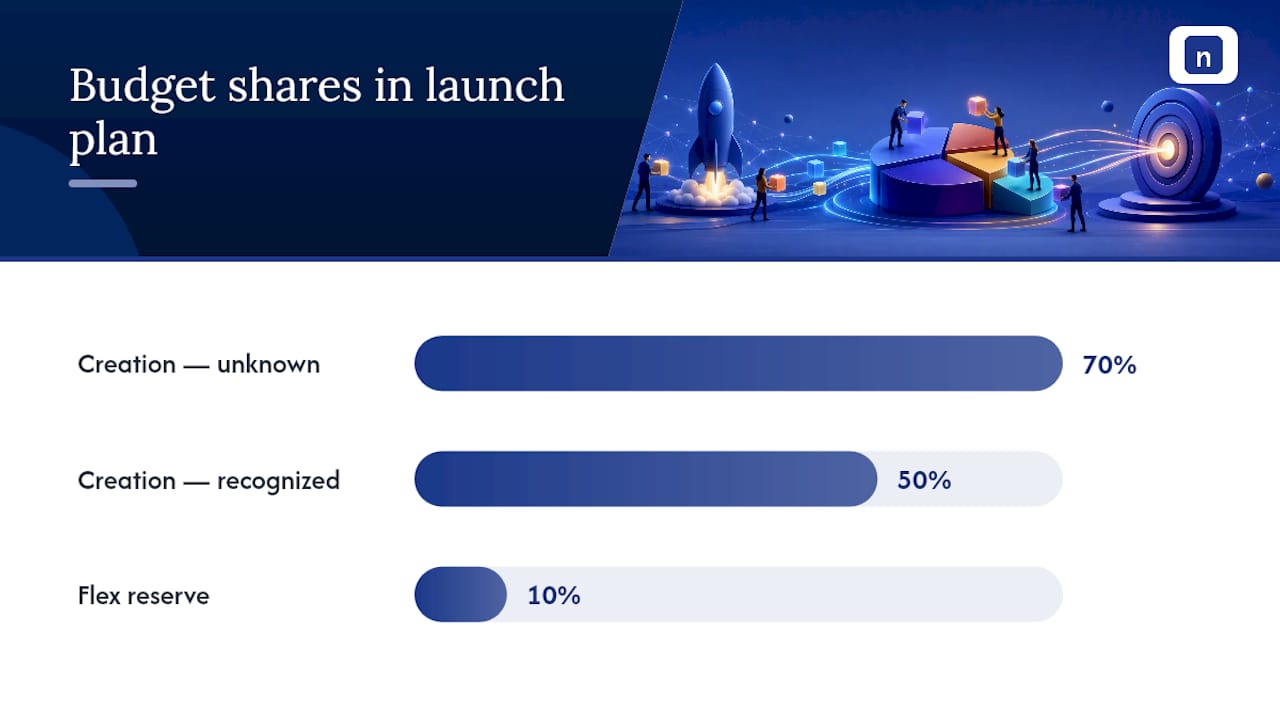
- Define your creation/capture split based on existing brand awareness. Unknown brands lean 70/30 toward creation; recognized brands can run closer to 50/50.
- Pick channels by function, not by which platform your team already knows how to run.
- Sequence spend by phase: light pre-launch spend to build the warm pool, full weight during the 7 to 10 day launch push, then pull reach builders back to maintenance frequency once the launch window closes.
- Enforce a minimum effective spend per channel. A channel funded below its floor produces noisy data, not a real read on performance.
- Build measurement into the plan itself rather than bolting it on afterward, so you know by day three whether a channel is worth its budget.
Hold back roughly 10% of total budget as flex spend, then funnel it toward whatever channel or creative is clearly outperforming once launch week data starts coming in. Reach builders should hit 3 to 5 weekly exposures per user; converters should be judged on cost per acquisition trend, not raw impression volume.
Kill a channel that’s underperforming its floor by the midpoint of launch week rather than waiting for the full campaign to close. Reallocating that budget toward a channel already showing signal beats spreading it thinner across everything. Watch three checkpoints as spend rolls out: brand search lift after the first 48 hours, CPA trend across the first week, and creative click-through by day three. Any one of them trending the wrong way is a signal to adjust before the budget is gone, not after.
What KPIs Actually Predict Launch Success?
Vanity metrics like total impressions tell you almost nothing about whether a launch worked. The metrics that matter split into leading indicators and cohort-based outcomes, and tracking both is what lets you optimize mid-flight instead of only learning after the fact.
- Leading indicators: brand search lift, thumb-stop/click-through rate on creative, waitlist growth rate, and CPM/CPA trend over the first 72 hours.
- Launch-week targets: a retargeting-specific ROAS goal (set this before launch, not after), plus a minimum conversion rate threshold for cold prospecting.
- 30-day cohort metrics: repeat purchase rate, early LTV signals, and retention curve shape compared to prior launches or benchmark cohorts.
Structure the 30-day debrief around a phase-by-phase ROAS chart rather than a single blended number, since blending pre-launch, launch-week, and sustain spend together hides which phase actually earned its budget. Attribution during launch week is messy by nature. Trust directional trend over exact multi-touch percentages, and treat any single-day spike with suspicion until it holds for 72 hours.
Three Launch Playbooks You Can Adapt
Different launch types call for different tactical emphasis, and the strongest campaigns tend to follow one of three recognizable shapes.
- Category-entry technical storytelling: lead with engineer-built briefings and demo content that shows exactly how the product works, aimed squarely at earned media. Technical depth and demonstrable proof help justify premium pricing and earn editorial coverage that a straight paid campaign can’t buy. Track earned placements and how often the product gets cited in follow-up coverage.
- Creator-led waitlist: seed micro-influencers early, gate access behind the waitlist, then amplify UGC from those creators during launch week itself. Track waitlist-to-purchase conversion as the primary signal.
- Experiential or retail drop: pair an in-store demo or pop-up event with exclusive early access, then amplify with paid social once footage exists. Track footfall-to-conversion rate and UGC volume generated on-site.
B2B SaaS launches usually lean toward the category-entry model, substituting a live product demo for a retail pop-up. DTC brands tend to get more mileage from the creator and waitlist approach, since physical products photograph and unbox well on camera.
How Nowyourlink Fits Into a Launch Media Plan
Homepage visibility is a scarce resource during launch week, and most ad platforms sell it as one slot among many competing placements. NowYourLink runs a daily sealed-bid auction for a single homepage slot called The Spotlight, where the highest bidder gets the full 24 hours with no other ad competing for attention.
Advertisers join for free and only pay if their bid wins, which keeps the risk profile simple for a launch team testing a new visibility channel for the first time. Because the winning ad runs alone for that day, there’s no share-of-voice dilution during the exact window a launch announcement or limited-time offer needs undivided attention.
A launch day that competes for space with a dozen other ads on the same page is a launch day that’s lost half its impact before the first click ever happens.
Marketing professionals who work with agencies should note that agency-side workflows for booking and reselling homepage placements exist as a separate use case from direct-brand bidding.
Launch Advertising Doesn’t Live in Isolation
Advertising spend during a launch works only as hard as the PR and organic content surrounding it. A paid campaign announcing a product that no journalist has heard of yet is starting from zero, which is why the press kit and embargo outreach from pre-launch need to land before the first ad ever runs.
Owned content, earned media, and paid amplification each do a different job, and treating them as one integrated system rather than three separate workstreams is what produces compounding visibility instead of a single day’s spike. A detailed product page or technical blog post published two weeks before launch gives journalists something to link to and gives AI search tools something to cite months later. Paid media then amplifies whatever that owned content already proves.
PR timing needs to sync with the media plan’s spend sequencing, not run on its own calendar. An embargo lift that happens three days after the ad campaign has already gone live wastes the exclusivity journalists were promised, and a paid push that starts before any earned coverage exists has no third-party validation to lean on. The tightest launches sequence these deliberately: earned coverage lands first, paid media amplifies it within 24 to 48 hours, and organic social reshares both.
Cross-functional coordination matters more here than in almost any other marketing motion, because the PR team, the paid media team, and the product team are all working against the same immovable launch date. A shared calendar with hard checkpoints, not just a shared goal, is usually what keeps these three groups actually in sync during launch week itself.
Planning for What Goes Wrong During Launch
Every launch plan needs a contingency built in before problems show up, because something in a launch week almost always goes sideways. The most common failure points are predictable enough to plan around in advance.
Creative underperformance is the most frequent issue. If none of your 3 to 6 initial hooks are hitting benchmark click-through by day two, that’s a signal to pull the flex budget forward and test replacement creative immediately rather than waiting out the full week hoping performance improves.
Supply and fulfillment risk can undercut even a perfectly executed ad campaign. If inventory or capacity can’t support demand generated by the launch push, throttling paid spend temporarily is better than driving traffic to a waitlist or backorder page that damages first impressions.
Negative early reviews or a product issue discovered during launch week require a fast decision tree: pause paid amplification of the specific creative or claim in question, but don’t pull the entire campaign unless the issue is material. Overreacting to a handful of negative comments often costs more momentum than the original problem would have.
Budget overrun happens when a channel outperforms projections and burns its allocation faster than expected.
Build a one-page contingency sheet before launch day with named owners for each of these scenarios. A launch team debating who’s authorized to pause a campaign while it’s actively losing money is a team that’s already behind.
Getting Audience Segmentation Right Before You Spend
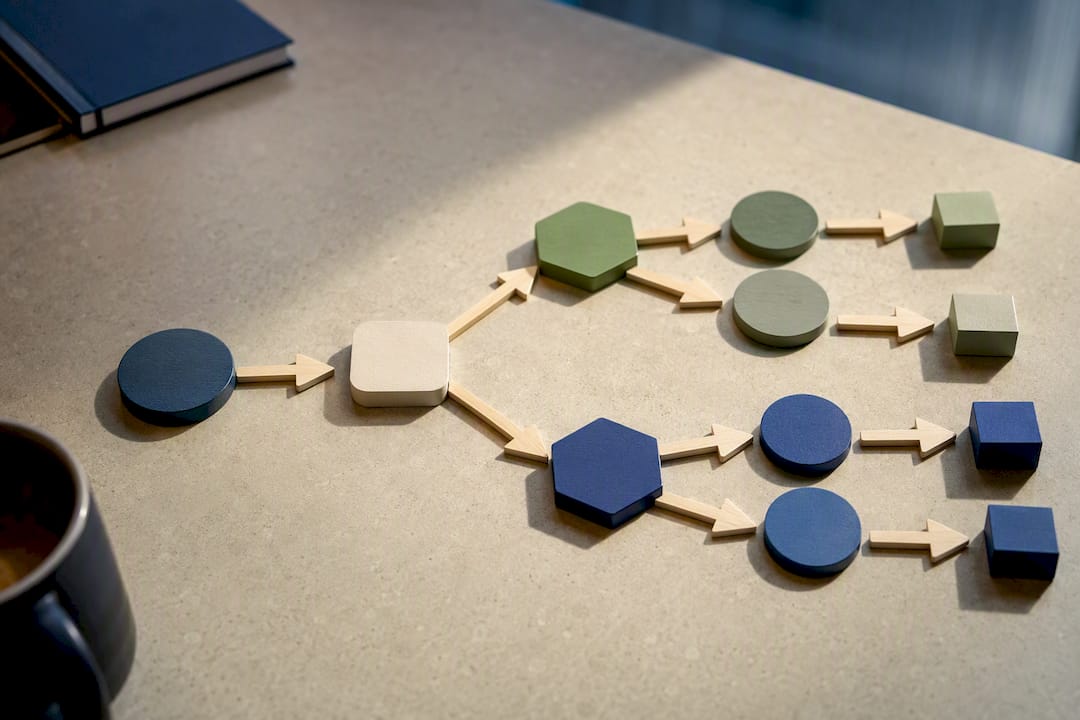
Launch campaigns often get built around a single generic persona, which is usually the fastest way to waste early budget. Segmenting the waitlist and early audience by intent signal, not just demographic, gives the media plan sharper targeting once launch week spend goes live.
Split your pre-launch waitlist into at least two groups: people who opted in after seeing organic or earned content (higher intent, likely to convert fast) and people who opted in through paid acquisition (lower intent, need more nurturing before they’ll buy). These two groups should get different email and retargeting sequences during launch week, not one blanket blast.
Refine personas using whatever first-party data the waitlist and pre-launch quiz or survey actually generated, rather than relying on assumptions carried over from the original product brief. A waitlist built around a real incentive rather than a plain opt-in form tends to attract higher-intent signups, and that same incentive structure often reveals which sub-audience responds to which specific benefit.
For B2B SaaS launches, segmentation usually splits along role (economic buyer vs. end user) rather than demographic lines, and the ad creative should shift accordingly: ROI-focused messaging for the buyer, workflow and ease-of-use messaging for the user. DTC launches segment more naturally by purchase occasion or existing customer status. A returning customer and a brand-new prospect should almost never see the identical launch ad.
Where Competitive Positioning Fits the Media Plan
A launch advertising plan built without a clear read on the competitive field usually ends up copying whatever the last competitor did, rather than earning its own space in the category. Before the media plan gets finalized, map what claims and creative angles competitors are already running in paid social and search.
If three competitors are all running discount-led launch messaging, a technical-storytelling or proof-led angle stands out simply by being different, and it also tends to earn more organic and earned pickup since it’s not competing against a wall of similar-sounding ads. This is part of why category-entry launches that lean on technical depth and named customer proof tend to justify premium pricing better than launches that just claim to be better without showing why.
Positioning also determines which channels are worth fighting for. If a direct competitor already dominates search share of voice for your core launch keyword, capture-focused search spend during launch week may be less efficient than doubling down on creation-focused reach building where the competitive field is thinner.
Run this competitive scan again at the midpoint of launch week, not just before it starts. Competitors sometimes respond to a launch announcement by increasing their own spend or adjusting messaging, and a media plan that doesn’t account for that shift mid-campaign can lose share of voice it had at the outset.
What the Data Actually Says About Launch Advertising
Most launch advice defaults to “post everywhere and boost your best content,” which is close to the opposite of what a disciplined media plan actually requires. The research on this is fairly consistent: sequencing beats simultaneity, and function beats familiarity when picking channels.
The overrated tactic, in my view, is the single hero launch video treated as the entire creative strategy. Teams pour weeks into one polished 60-second film and then wonder why performance plateaus by day three. The data on creative testing is clear that variation, not polish, drives platform learning. A rougher UGC cut that tests well will usually outearn a beautifully produced hero video that never gets a real comparison point.
What gets underweighted is the pre-launch waitlist incentive. Plenty of teams build a “notify me” form and call the audience-building box checked, then wonder why launch-week retargeting underperforms. The incentive is what separates a list of curious browsers from a list of buyers.
If you take one thing from this playbook, prioritize the sequencing discipline over the creative polish. Get the phases right, fund each channel to its effective minimum, and hold your flex budget for the moment data tells you where to spend it. That decision, made mid-launch instead of pre-planned, is usually the highest-leverage call your team makes all week.
— Arne
Give Your Launch Day the Homepage’s Full Attention
Every tactic in this playbook competes for attention against dozens of other ads running on the same platforms at the same time, which is exactly the problem The Spotlight was built to solve. NowYourLink runs a daily sealed-bid auction for one homepage ad slot, and whoever wins gets the full 24 hours with zero competing placements on that page.
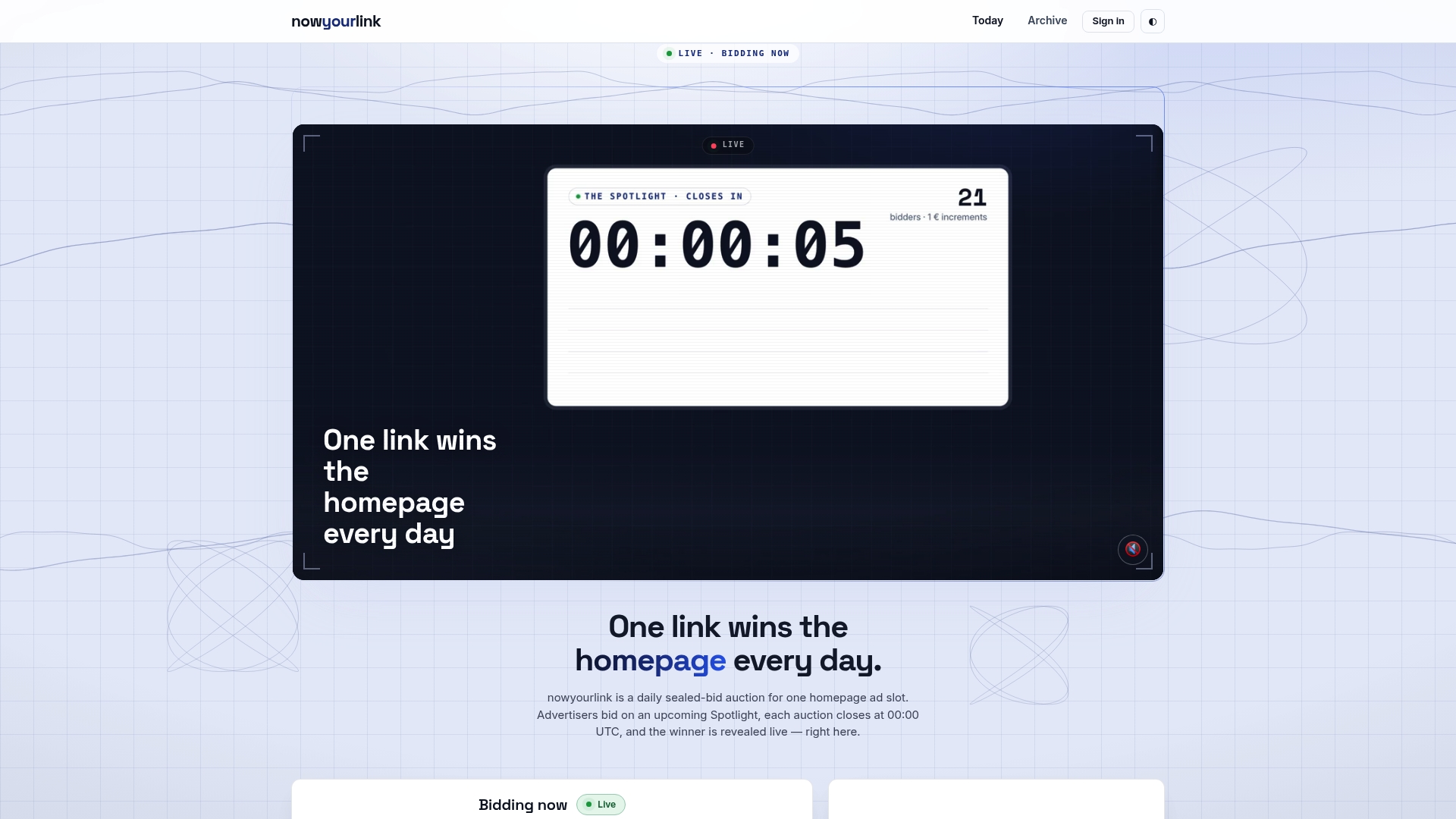
For a launch, that means your hero-day announcement, a limited-time launch offer, or a PR amplification push can run without fighting for eyeballs against other advertisers. Bidding is private and hidden until the auction closes at midnight UTC, and joining costs nothing. You only pay if you’re the winning bid. There’s no ongoing contract, no rotating ad slots diluting your reach, and no guessing whether your launch-day spend actually got seen.
SaaS teams can check how The Spotlight fits a B2B launch use case, and agencies managing multiple client launches can review the agency workflow for booking placements on behalf of clients. If your launch date is set, browse current and upcoming Spotlight availability and place a bid for the day that matters most.
Sources
- How to plan your product launch PR campaign | Cision
- How to build a media plan for a product launch (5 steps) | Based Marketing
- How to run a product launch campaign for DTC brands (2026) | Apex Brands
- Brand launch campaign ideas that actually work | AskNeedle
- Dyson CameraJet: The launch playbook | Pulse Advertising
FAQ
What are the 7 steps of a product launch?
Most frameworks compress to: audience research, pre-launch waitlist building, press kit and embargo outreach, creative production, launch-week media sequencing, post-launch retention flows, and a 30-day performance debrief.
What is the 3-3-3 rule for marketing?
Definitions of this rule vary across marketers, and no single standardized version applies specifically to product launch advertising, so it’s best treated as a general marketing heuristic rather than a launch-specific framework.
Can you give me an example of a product launch?
A DTC brand might run a 4-week waitlist with founder pricing as the incentive, launch with a 7-day paid push across social and retargeting, then spend 30 days optimizing based on UGC and repeat purchase data. A SaaS brand might instead pair a technical demo and engineer-led briefing with a single-day homepage placement, like NowYourLink’s Spotlight, to concentrate attention on launch day itself.
What does “product launch” mean?
A product launch is the coordinated release of a new product to market, combining PR, paid advertising, and organic content to build awareness and drive initial adoption within a defined campaign window.
How much should you budget for launch advertising?
Budgets vary widely by category and channel mix, but the practical floor is whatever amount lets each chosen channel hit its minimum effective spend. Underfunding several channels at once produces noisy data instead of a real read on what’s working.